Elys Life · The Business Case

Stress is already on your P&L. You just can’t see the line yet.

Anxiety and burnout are the largest unlisted expense in most companies — paid out quietly in lost focus, sick days, and the people who leave. Elys turns that invisible line into something you can measure, and lower.

The global cost of mental ill-health, every year

$5,000,000,000,000

$5 trillion a year — and rising — is what mental-health conditions take from the world economy. Source: World Economic Forum · Harvard.

12B
working days lost worldwide, annually
$6T
projected annual cost by 2030
Developed with researchers from
Harvard Oxford Stanford
Featured in Entrepreneur

The line you can’t see

It never shows up as one number — so it never gets managed.

Payroll, software, real estate: every material cost has a line and an owner. The cost of a stressed nervous system doesn’t. It hides inside the other lines — a missed deadline here, a resignation there, three quiet sick days — until it’s large enough to feel and too diffuse to fix.

Elys makes it a line item. Measured, benchmarked, and moving in the right direction.

Operating expensesFY — illustrative
Payroll & benefits$ ————
Software & tooling$ ———
Real estate$ ——
Recruiting & onboarding$ ——
Stress, burnout & attrition not tracked

The largest people-cost in the business is the one line no finance team can quote. Elys gives it a number.

Where the money goes

Illustrative composition of the cost of untreated workplace stress. The biggest share — presenteeism — is invisible on any timesheet.

Presenteeismat their desk, running at half capacity
~60%
Turnover & replacementrehire, retrain, lost knowledge
~20%
Absenteeismsick days & stress leave
~14%
Claims & disabilitylong-tail health cost
~6%

Under pressure

Two teams. Same deadline.

Stress is inevitable — the cost isn’t. What separates companies is what the nervous system does under load: snap, or hold. Here’s that same P&L line, playing out in people.

The team that breaks

Reacts to pressure

  • × Sleep and focus collapse first
  • × Sick days, mistakes, quiet quitting
  • × The best people burn out and leave
Composure at peak load34%

The team that holds

Regulates pressure

  • Recovers overnight, shows up sharp
  • Clear heads on the highest-stakes calls
  • Retains the people it can’t afford to lose
Composure at peak load92%

The benefits graveyard

You already pay for wellbeing. Almost none of it gets opened.

The average wellbeing perk is opened by a low single-digit share of a team — then quietly forgotten. The line item stays; the usage doesn’t. Here’s what that graveyard usually looks like — and the one benefit that behaves differently.

Bought, announced, then forgotten
EAP hotline
A number on a poster no one has ever dialled.
<3% ever call
Gym stipend
Claimed in January. Untouched by February.
used twice
Meditation app
Downloaded on launch day. Opened once.
forgotten
Therapy allowance
A three-week wait, then the hard night has passed.
3-week wait
Lunch-&-learn
Twelve signed up. Two showed. Slides never reopened.
2 attended
The one they open
Elys

Not filed away in an onboarding email. Opened on the days that actually hurt — the panic before a review, the 2am that won’t quiet down — and used again the next hard day.

4 of 5
hard days a member opens Elys — vs. a benefit opened once a year.
Last 15 hard daysblue·opened  gold·rescue

The first line, in the moment

A panic attack can run for an hour. With Elys, it’s minutes.

When someone hits an acute panic attack, they tap “I need help.” Instead of riding it out alone, Elys walks them through the acute phase right then — and in members’ experience the spike settles in minutes, at their desk or at 2am. No waitlist. No six-week wait for a first appointment.

That’s the difference between a lost day and a five-minute reset — multiplied across a team.

An hour
riding it out alone
Minutes
with Elys “I need help”

Directional, from members’ experience — not a clinical claim.

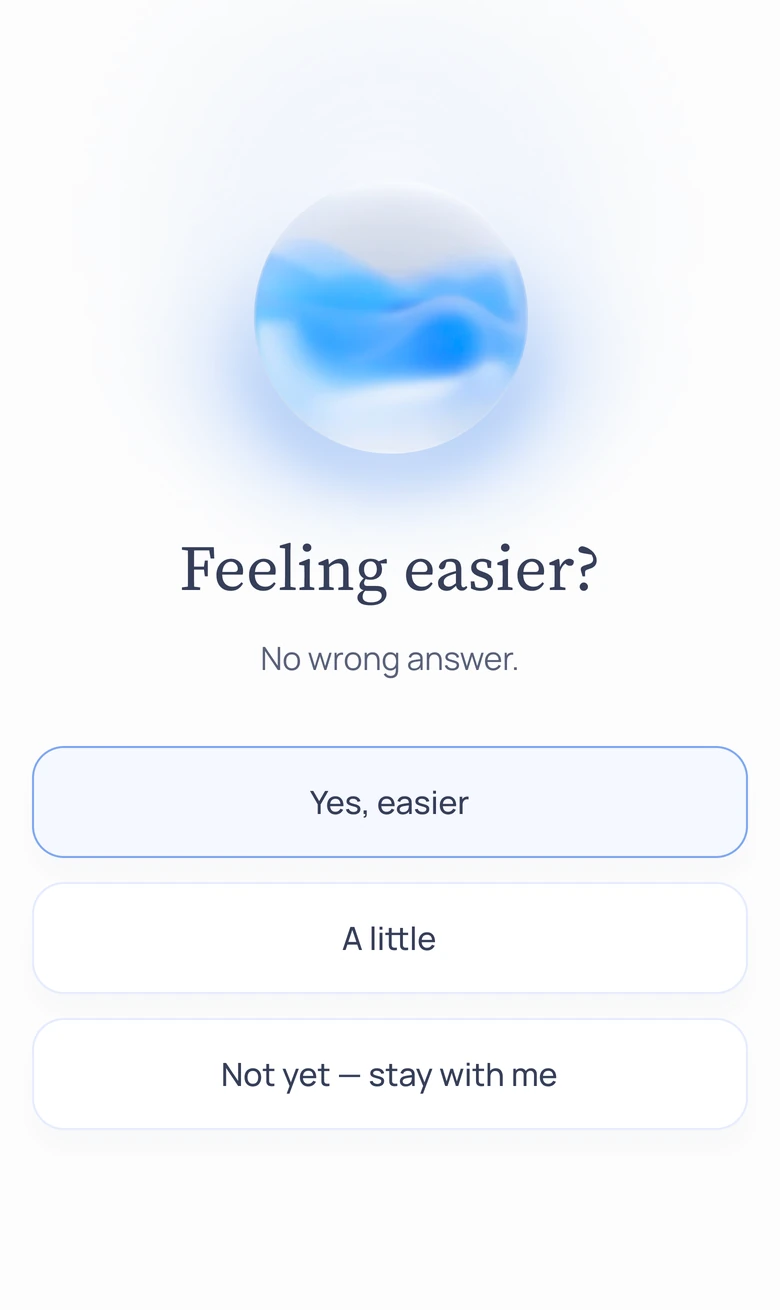
Elys — Help me now: name what you're feeling, get the right practice

Anxiety doesn’t wait for a therapy appointment

The usual path
~3 weeks

Average wait for a first therapy appointment — long after the hard night has passed.

With Elys
~2 min

One tap steadies the acute moment — then a daily practice so it happens less often.

What every employee gets

A real product. Live in the App Store.

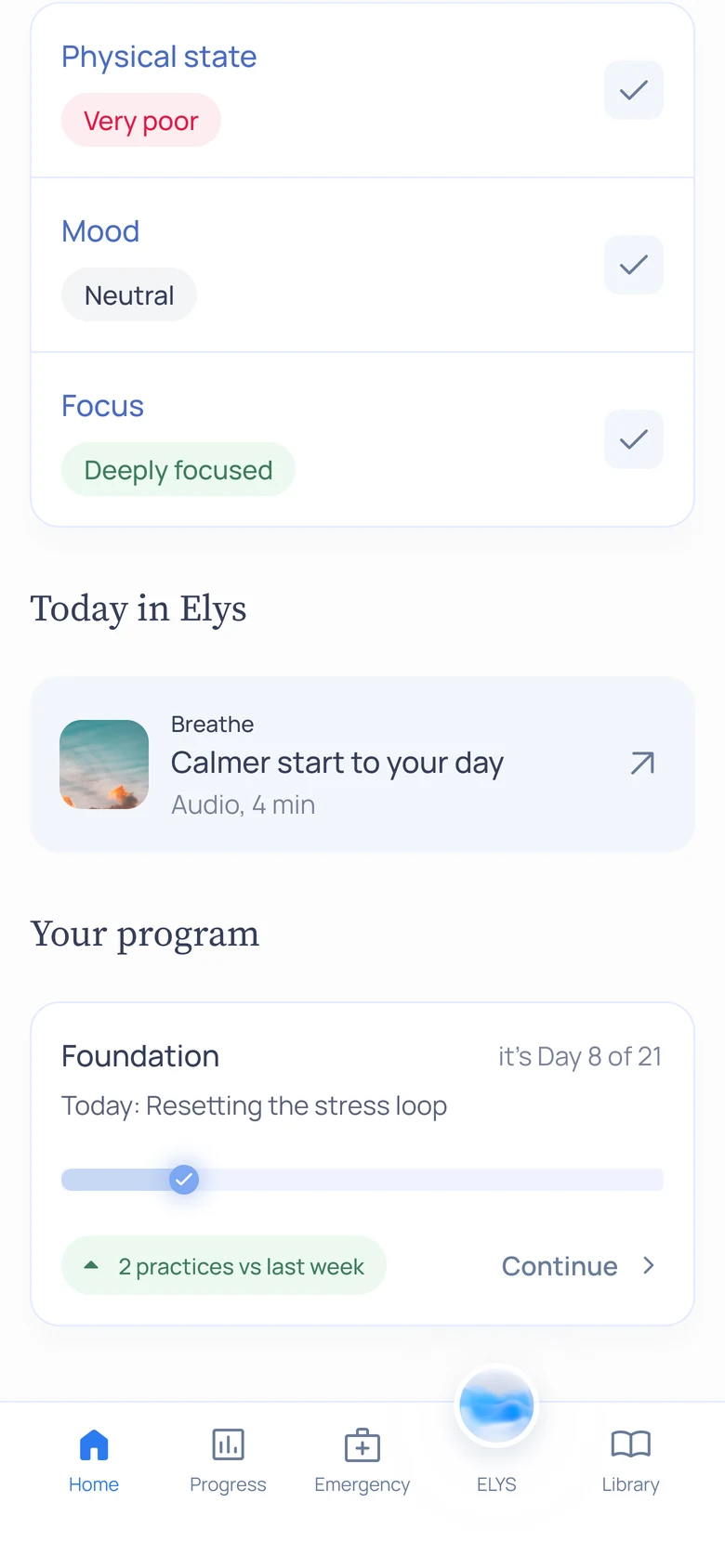
Not a portal or a PDF. Each person gets the full Elys app plus a team resilience program — theirs, private, and genuinely used.

Download on the App Store
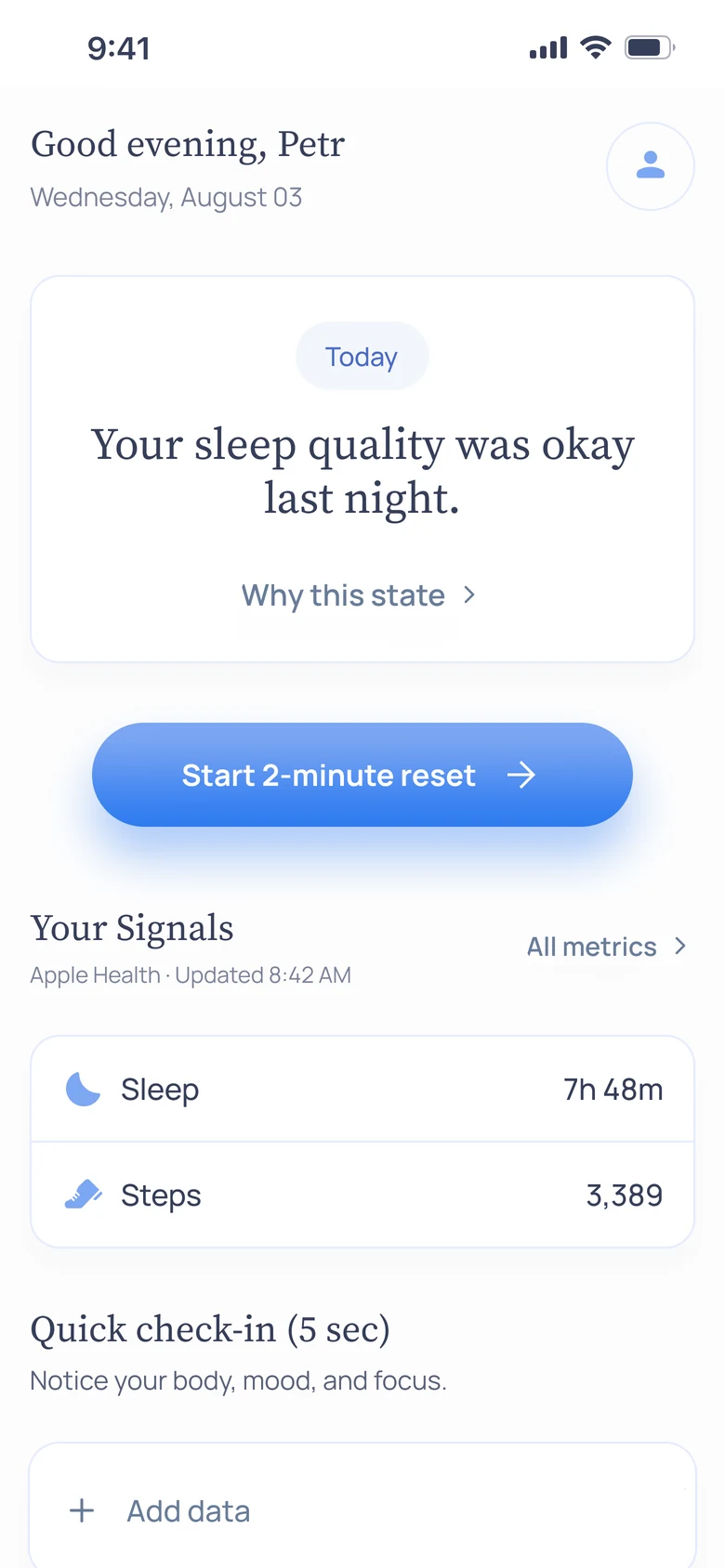
Elys home screen with daily state and signals

Daily stateSleep, stress and recovery, read at a glance.

Elys AI assistant conversation

Elys, the assistantA conversation that knows the day is still in your body.

Elys Help me now screen

One-tap rescueName what’s happening — the practice that fits, in seconds.

What the intervention actually is

Not a wellness perk. An operating system for the nervous system.

Elys reads three real data streams, then acts — in the moment when panic hits, and over the weeks before anxiety becomes the default. It works reactively and preventively.

Stream 01

Clinical labs

Objective biomarkers through partner clinics — the physiology under the stress, not a guess.

Partner clinics
Stream 02

Wearables

Sleep, recovery and strain, synced continuously from the devices your team already wears.

Apple Health · Oura · WHOOP
Stream 03

Daily state

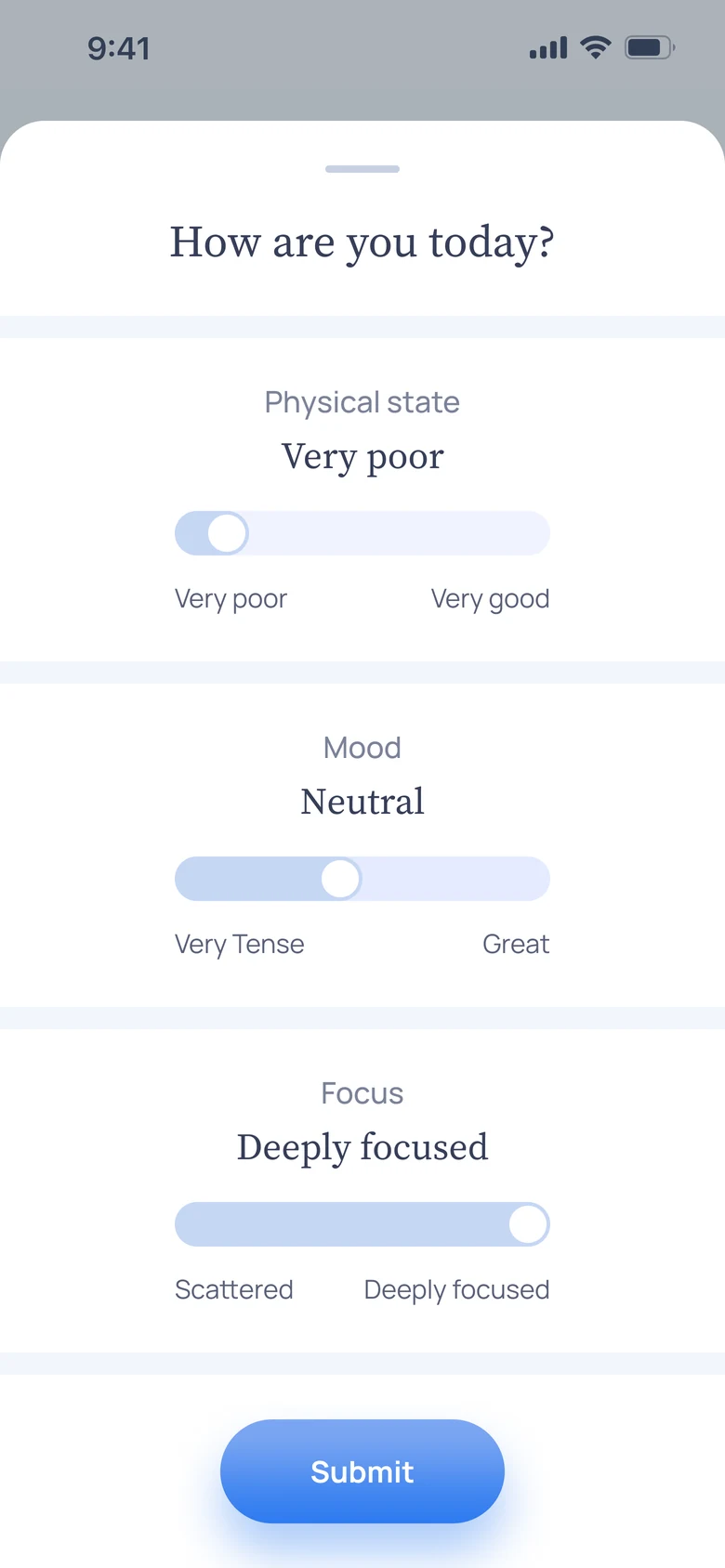
Subjective check-ins and real conversation with the AI assistant, Elys — what the data can’t see.

Check-ins + AI assistant

A protocol with a start, a middle, and a hold.

Structured like a program, not an app you forget to open.

21
Reset the pattern. Three weeks to break the default stress loop.
60
Reinforce. The new baseline starts to hold under real load.
90
Lock it in. Resilience becomes the resting state, not the exception.

What you see · the risk

The shape of your organization’s stress — read like any operating metric.

Recovery trending up, and exactly where burnout risk sits, quarter over quarter. You read the risk the way you’d read any other line on the business — and you never see a single person’s numbers.

Team resilience — aggregated, anonymized
Q3 · 480 employees
Recovery index — 12-week trend
+18%▲ since program start
Wk 1Wk 4Wk 8Wk 12
Aggregate recovery index
74
up from 56 at program start — the team, recovering
Burnout risk by team — where the cost concentrates
Sales
High
Support
Moderate
Engineering
Moderate
Ops
Low
Design
Low
Privacy-first, by design. Every chart above is a team-level aggregate with minimum group sizes. The employer never sees an individual’s check-ins, conversations, wearable data, or lab results — ever.

What you see · proof of use

The other metric HR actually wants: they keep using it.

The risk view tells you what stress is costing. This tells you the benefit is alive — adoption, active use on the hard days, and the team’s mood easing over time. Warm signals of care, never a window into any individual.

Team engagement — anonymized & aggregated
Last 90 days · 420 people
Weekly active members
83%▲ +61 pts since launch
LaunchWk 4Wk 8Wk 12
Actively using this month
83%
of the team, in a normal month
Opened on the days that matter
4of the last 5 hard days
Reached for when it’s actually needed — the test a benefit usually fails.
Adoption vs. a typical wellbeing app
Elysweekly active
83%
Typical appindustry weekly active
~4%
Aggregate stress load, easing
Team-wide and de-identified — calmer, together, over the quarter.
Every number here is a team-level aggregate, with minimum group sizes. You see that the benefit is used and the team is easing — never who, never their check-ins, conversations or scores.

Do the math on your own team

The cost of doing nothing is already being paid.

Drag to your headcount. This is the productivity already leaking out of the business each year — before a single sick day is counted.

Your team size
people
255,000
Est. annual productivity cost
$150,000
At ~$300 / employee / year in lost productivity (WHO-derived).
Working days lost / year
1,750
Roughly 3.5 days per employee, distributed and invisible.

Illustrative only. Figures are derived from WHO estimates of productivity lost to anxiety and depression (~12B working days a year) applied at a per-employee level. Actual figures vary by role, region and industry — a proposal models your real headcount and cost base.

Privacy-first — by architecture

The employer never sees an individual. Ever.

Trust is the product. The fastest way to kill a wellbeing tool is the fear that the employer is watching — so Elys is built so you can’t. Personal data stays with the person; you receive only the shape. It’s a hard wall, enforced in the architecture, not a promise in a policy.

De-identified Aggregated Consent-based
The employee sees
Their side of the wall
Everything.Full personal detail — it’s theirs alone.
  • Their own scores — sleep, stress and recovery, in detail
  • Every conversation with Elys, private to them
  • The rescue tools and their full personal history
Never crosses
The company sees
Their side of the wall
Only the shape.Anonymized, aggregated — never who.
  • Aggregated, anonymized trends — e.g. “team stress easing”
  • Adoption at a group level — that the benefit is used, never by whom
  • No individual is ever identifiable. By design, not by policy
Minimum group sizes on every chart. The wall is enforced in the architecture — there is no admin view that could reveal a person, even if someone asked for one.

Enterprise-readySSO, data residency and white-label on request.

Why it matters to the business

People don’t leave companies that catch them.

Duty of care isn’t soft. Anxiety walks people out the door and quietly drains the days they stay. Meeting it early is retention, culture and eNPS — and a team that trusts you did something real on the night it counted.

  • Replacing one person can cost tens of thousands — the benefit that removes reasons to leave pays for itself quietly.
  • The one people mention in an exit interview — for the right reason.
  • A visible signal, on the record, that the company shows up when it’s hard.
6–9 mo
of salary — the typical cost to replace one person who burns out and leaves.
+eNPS
the benefit people name unprompted — a measurable lift in how the team rates working here.
1 hard night
is often what decides whether someone feels caught — or alone. That’s the moment Elys is built for.

From the people who chose it

The one they don’t have to be nudged to use.

We’ve bought wellbeing tools before. This is the first one people mention unprompted — because it helped them on a night they won’t forget.

HPHead of People400-person scale-up

The privacy line is what let me stand behind it. I don’t see anyone’s data, and I can say that honestly. That’s why the team trusted it.

CHCHROGlobal services firm

Illustrative composites of the feedback we hear — roles shown, individuals anonymized.

Request a proposal

Get your team’s stress baseline.

A proposal models the real cost against your headcount, and shows exactly what your people would receive. Renat’s team handles this personally.

  • Aggregated, anonymized team dashboard — employer never sees individuals.
  • Full live app + a structured 21/60/90-day program per employee.
  • A cost model built on your real headcount, not a template.
  • Enterprise-ready — SSO, data residency and white-label on request.

Optional: a 5-minute brief from the founder — on request. We’ll include it if it’s useful.

By invitation. No cold outreach — a real person replies.

Noted.

Renat’s team will reach out.